
Mentorship Program | Second Cohort Graduation Ceremony and Career Development Seminar in the Age of AI
Jun 2, 2026 · 1 view
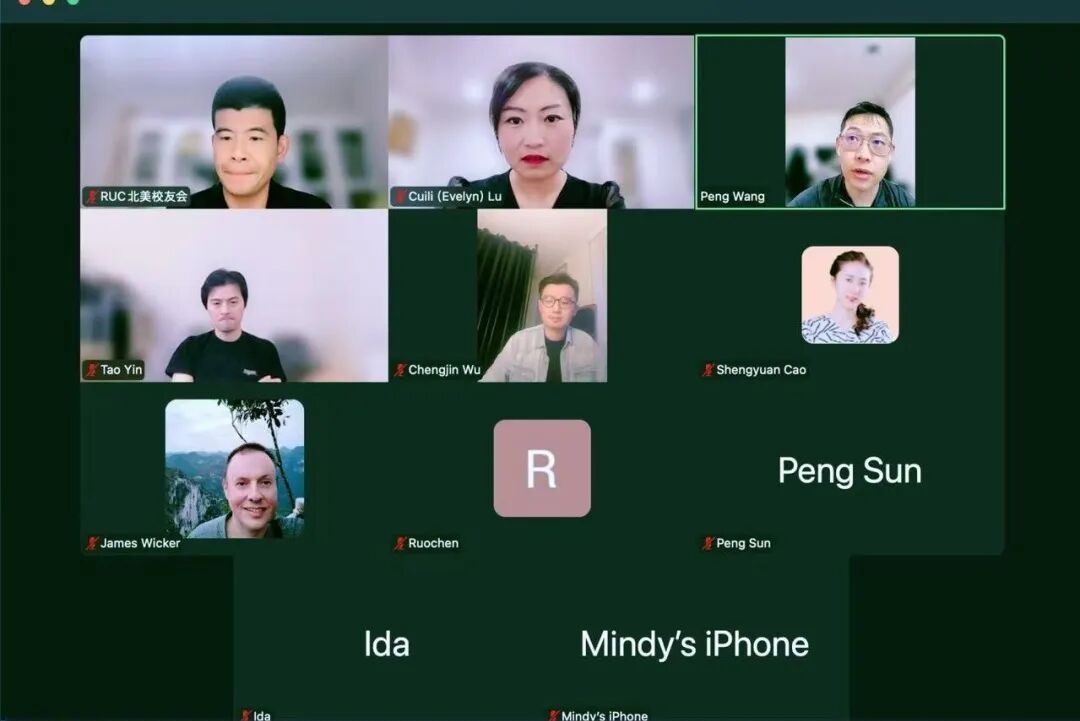
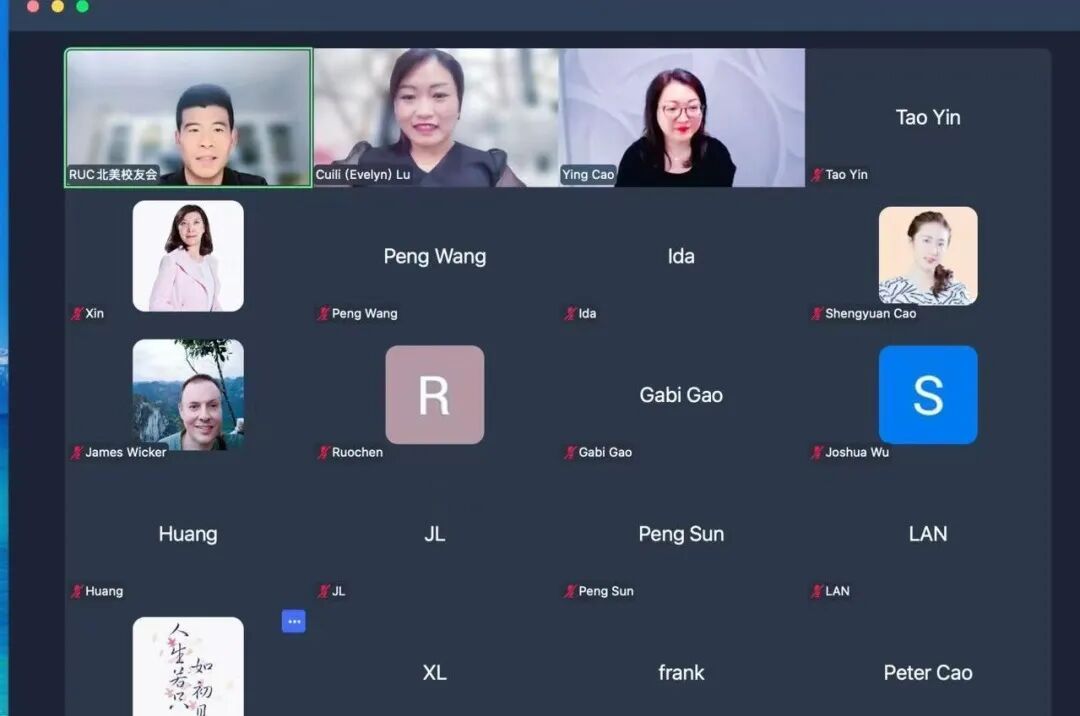
On May 30, the RUC North America Alumni Association successfully held the graduation ceremony for the second cohort of its “Mentorship” Career Development Program. Mentors, mentees, and alumni representatives gathered to reflect on the program’s achievements and experiences. The event also featured a keynote session by Ying Cao, a former Wall Street executive and career and entrepreneurship coach, who shared her insights on “Career Development Strategies in the Age of AI,” offering fresh perspectives and inspiration for alumni navigating their careers and future development.
Building Connections Through Trust, Passing on the Strength of the Alumni Community
The “Mentorship” program is designed to foster meaningful exchanges between alumni mentors and mentees, providing participants with firsthand professional experience, career feedback, and ongoing support for personal and professional growth.
Each cohort brings together 20–30 experienced professionals as mentors and 20–30 mentees, with priority given to alumni. Participation is entirely voluntary, with the program encouraging mutual support and meaningful connections among members of the alumni community.
At the event, program team members Xu Junjun, Lu Cuili, Wang Peng, and Yin Tao introduced the program’s operations and future development plans. They also expressed their appreciation to the mentors and mentees for their enthusiastic participation and generous contributions over the past several months.
The “Mentorship” program aspires to become a long-term platform for mutual support among alumni—helping more alumni achieve professional growth and make meaningful breakthroughs in their careers and lives. Recruitment for the third cohort is planned for September and October this year, and more alumni are warmly encouraged to join.
Mentorship: A Key Competency for Career Development
Mentor representative Wang Peng shared his personal experience and reflections on the importance of mentorship in career development.
He noted that both “Being Mentored” and “Mentoring Others” are essential capabilities in today’s workplace.
Effective mentees need to learn how to ask high-quality questions, absorb feedback, and turn insights into action. Effective mentors, meanwhile, need to listen carefully, identify and distill key issues, and offer specific and practical advice.
From choosing a career direction and evaluating opportunities to preparing for interviews and negotiating offers, outside perspectives and firsthand experience can provide valuable support at nearly every critical stage of a career.
Wang particularly noted that many Chinese professionals in North America possess strong execution skills and a high degree of self-motivation, but often have a tendency to solve problems on their own. Developing a mindset of proactively seeking guidance and continuously building professional connections, he said, will become an increasingly important competitive advantage in future career development.
Mentee Reflections: Trust Is the Starting Point for Growth
Mentee representative Wu Chengjin shared his reflections and takeaways from the program.
He noted that the natural sense of trust among alumni provides a strong foundation for candid conversations, deeper exchanges, and collaborative problem-solving.
In his view, the greatest value of the program lies not only in receiving specific career advice, but also in building relationships that can last for years. Although the formal program has a limited duration, the connections established between mentors and mentees can continue well beyond the program and become an important source of support throughout their professional journeys.
He also encouraged mentees to take the initiative in communicating with their mentors, value their mentors’ time, and deepen these relationships through continued interaction.
Career Development in the Age of AI: Building a Life with “Money, Time, and Meaning”
A highlight of the event was a keynote presentation by Ying Cao, a former Wall Street executive and career and entrepreneurship coach, on “Career Development Strategies in the Age of AI.”
Drawing on more than 20 years of professional experience, Cao shared her career journey from management consulting to investment banking leadership and ultimately to entrepreneurship and career coaching.
Early in her career, she learned the importance of exploring one’s strengths and passions as early as possible. During her time at Barclays, she successfully transitioned from Credit Trading to Digital Strategy, adopting an entrepreneurial mindset to drive business innovation. She eventually became Head of Digital Markets, leading a team of more than 1,000 people and achieving significant growth in both her career and income.
As her career progressed, however, she began to rethink the meaning of success. She came to realize that promotions and higher compensation, in the traditional sense, did not necessarily translate into a greater sense of fulfillment. She ultimately left Wall Street to establish her own coaching business, seeking to bring greater alignment among time freedom, financial freedom, and a sense of purpose. Since then, she has helped more than 500 Chinese executives overcome career bottlenecks and navigate professional transitions and growth.
Discussing emerging trends in career development in the age of AI, Cao highlighted several changes in today’s professional environment:
High-paying industries such as finance and technology are undergoing structural adjustments;
Middle-management positions are gradually declining, with the traditional “Manager” role evolving into a “Player Coach” model;
AI will continue to replace standardized and repetitive forms of technical work;
Soft skills—including sales, relationship building, and systems development—will continue to increase in value.
Cao believes that more professionals will move away from traditional employment models toward “one-person companies” or small, highly specialized teams. New forms of work—including fractional roles, in which professionals serve multiple clients simultaneously, and AI consulting—are also likely to see rapid growth.
The “70-20-10 Principle” for Career Development
For career planning, Cao introduced her well-known “70-20-10 Principle”:
70% of one’s time should be devoted to a primary career, building wealth and professional capital;
20% should be dedicated to exploring a side business or secondary career, creating an additional source of income;
10% should be reserved for exploring personal interests and creating new possibilities for the future.
At the conclusion of her presentation, Cao summarized her core insight in one sentence:
“Many people spend their entire lives playing by rules defined by others. The truly important question is not how to get promoted or earn more, but what kind of life you really want.”
The presentation was followed by an enthusiastic Q&A session. Drawing on the metaphor that “A bird does not worry about the branch breaking, because it can fly,” Cao encouraged participants to remember that in a rapidly changing AI era, the most important qualities are the ability to keep learning, the ability to create, and the courage to take an active role in choosing one’s own path in life.
The event concluded amid lively discussion and exchange. Alumni participants noted that the session offered both practical approaches to career development and deeper reflections on career and life choices, providing new perspectives and inspiration for their future development.
Looking ahead, the “Mentorship” program will continue to leverage the strengths and resources of the alumni community to build a platform for connection, exchange, and growth—helping more alumni achieve new breakthroughs in both their professional and personal journeys.
Hosted by
RUC North America Alumni Association
Mentorship Program Team
About the Mentorship Program
The RUC North America Alumni Association is committed to building an alumni community that is both warm and deeply connected. Guided by the philosophy of “There is always something to learn from one another, and wisdom is passed from one generation to the next,” the Association launched the “Mentorship” Program to provide RUC alumni in North America with a platform to better understand the workplace, broaden their perspectives, deepen their knowledge, and advance their careers.
The program brings together accomplished professionals from diverse fields with extensive industry experience and expertise as mentors. Through small-group matching, mentors are paired with international students and early-career professionals to form mutually supportive partnerships based on the spirit of being both mentors and friends.
By fostering genuine exchange and long-term connections, the program aims to help younger alumni better understand the North American workplace, successfully make the transition from campus to professional life, and build a strong foundation for establishing themselves and pursuing their careers in North America.