
Columbia China Summit | Showcasing the Insights of RUC Alumni on the Global Stage
Apr 8, 2024 · 0 views
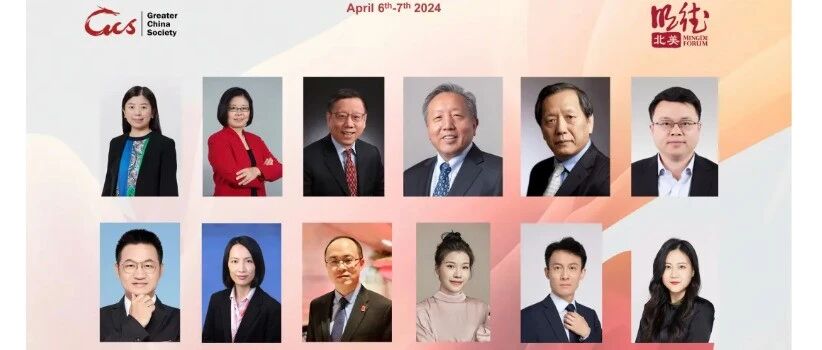
On April 7, the online forum of the Columbia China Summit, hosted by the RUC North America Alumni Association, was successfully held via Zoom Webinar. Professor Wu Xiaoqiu, former Vice President of Renmin University of China, delivered a keynote address, joined by more than a dozen RUC alumni from the financial sector for in-depth discussions.
The Columbia China Summit, formerly known as the China Business Forum, is organized by the Greater China Business Association at Columbia Business School. Focusing on China’s business development, it is regarded as one of the most influential China-focused business forums in North America. The 2024 Summit, themed “A New Chapter for China: Driving Economic Recovery and Leading Technological Innovation,” brought together dozens of speakers for in-depth discussions on China’s economic conditions and investment environment, China’s strategy as a major international power, manufacturing upgrading, energy transition, and reforms involving major internet companies.
The RUC North America Alumni Association became a strategic partner of the Summit in 2023. In 2024, the Association continued its support through the Mingde Forum brand and hosted the April 7 online forum as part of the Columbia China Summit.
Professor Wu Xiaoqiu delivered a keynote address on “Building China into a Financial Powerhouse.” He noted that China’s economy is currently undergoing a period of transition and that problems must be recognized and addressed directly: only by taking problems seriously can solutions be found. He said the Chinese economy remains resilient and that, fundamentally, it has no systemic problem. What is needed now is to restore confidence, uphold the market-oriented economic system whose effectiveness has been demonstrated over the past several decades, and further improve the legal framework and institutional environment in accordance with market principles.
He said the Central Financial Work Conference’s ambitious goal of building China into a financial powerhouse will serve as the overarching objective guiding the development of China’s financial sector for a considerable period ahead. Building a financial powerhouse will be a long-term process and reflects a country’s overall soft power. In some respects, he noted, it may be more difficult than building a major trading, economic, or military power.
According to Professor Wu, becoming a financial powerhouse requires openness and internationalization, including an internationally recognized currency, a modern financial system with diverse functions and business models, a deeper and more developed capital market, and a sound and scientific financial regulatory framework.
He further pointed out that building a financial powerhouse requires advancing market-oriented financial reforms and vigorously developing the capital market, so that financial resources can increasingly be allocated through market mechanisms. It also requires strengthening the rule of law, as finance is fundamentally based on contractual transactions and therefore depends on a well-developed legal system. At the same time, China should remain committed to internationalization and work toward greater international recognition of the role and position of China’s financial system.
Wu Yafeng, President of the RUC North America Alumni Association, delivered the opening remarks and moderated a panel discussion. In his remarks, he noted that Columbia and Renmin University of China share many similar characteristics in the humanities and social sciences. Through the collaboration between the RUC North America Alumni Association and the Columbia China Summit, RUC alumni can showcase their insights on an international platform, amplify their voices, and engage in dialogue with guests from Columbia, creating a productive exchange of perspectives.
He said that this collaboration between leading institutions also reflects a shared commitment. At a time when China-U.S. relations face certain difficulties, people can make their own contributions through non-governmental channels and independent efforts to promote exchanges in areas such as academia and education, strengthen people-to-people engagement, and contribute to more constructive China-U.S. relations.
Wu Yafeng also introduced the 10th Mingde Forum, which was scheduled to take place in New York in November, and expressed his hope for continued cooperation and support from Columbia Business School and people from various sectors.
RUC alumni Fan Xiwen, former Chief Risk Officer of the China-Latin America Cooperation Fund; Tao Wang, Chief China Economist at UBS; Ji Mo, Chief China Economist at DBS Bank; and Qiao Hong, Chief Greater China Economist at Bank of America, participated in the panel discussion “Balancing China’s Macroeconomic Development,”moderated by Wu Yafeng.
The panelists reviewed policy adjustments during various periods of economic imbalance in China over the past four decades, analyzed China’s emerging economic model and the evolving linkages between China and the global economy, and explored China’s potential economic growth amid challenges including population aging and restrictions on advanced technology. They also discussed pathways toward sustainable development and offered their perspectives on China’s economic outlook, including potential risks.
RUC alumni Li Shanquan, Senior Portfolio Manager at Invesco; Liu Chenjie, Chairman of Global Macro Hedge Fund at Wangzheng Capital; Wang Jian, Chief Analyst for the Financial Sector at Guosen Securities; and Zhang Yu, Chief Macro Analyst at China Renaissance Securities, participated in the panel discussion “New Investment Trends Amid Economic Recovery.” The session was moderated by Zhou Yuelang, Chief Analyst covering the Food & Beverage Industry at Nomura Orient International Securities.
The panelists discussed exchange rates, inflation, and investment; analyzed the meaning, measurement, and investment opportunities associated with new quality productive forces; explored four areas where perceptions of the economic situation diverge; and offered insights into the prospects of selected investment sectors.
The full online forum was moderated by RUC alumna Zhang Chujun.
Previously, on April 6, U.S. Eastern Time, the in-person sessions of the 2024 Columbia China Summit were held at Columbia Business School. Huang Ping, Consul General of China in New York, and other distinguished guests attended and delivered remarks.