Sharing RUC Insights with the World | Mingde Forum 2021 Held Online
Dec 14, 2021 · 0 views
From December 9 to 12, 2021, Mingde Forum 2021, hosted by the RUC North America Alumni Association, was held online. Liu Wei, President of Renmin University of China, delivered a video address to congratulate the Forum on its successful opening.
Under the theme “Economic Outlook and Chinese Equity Investment under the New Institutional Landscape,” the Forum brought together 20 leading scholars and practitioners in international politics, economics, finance, and investment from China and the United States. Over four days, they engaged in in-depth discussions on China-U.S. relations, the global economy, low-carbon transition, regulatory reform, financial investment, regional opportunities, and other topics, attracting more than 500 participants from around the world.
Founded by the RUC North America Alumni Association in New York in 2015, Mingde Forum is an open and international platform that seeks to balance academic depth with practical relevance. This year marked its seventh annual meeting. Since its inception, Mingde Forum has remained committed to bringing together professional expertise, focusing on strategic issues, and contributing to broader social and economic development. It has become one of the leading professional forums established overseas by RUC alumni, with a growing profile and influence among Chinese communities, scholars, and professionals in North America.
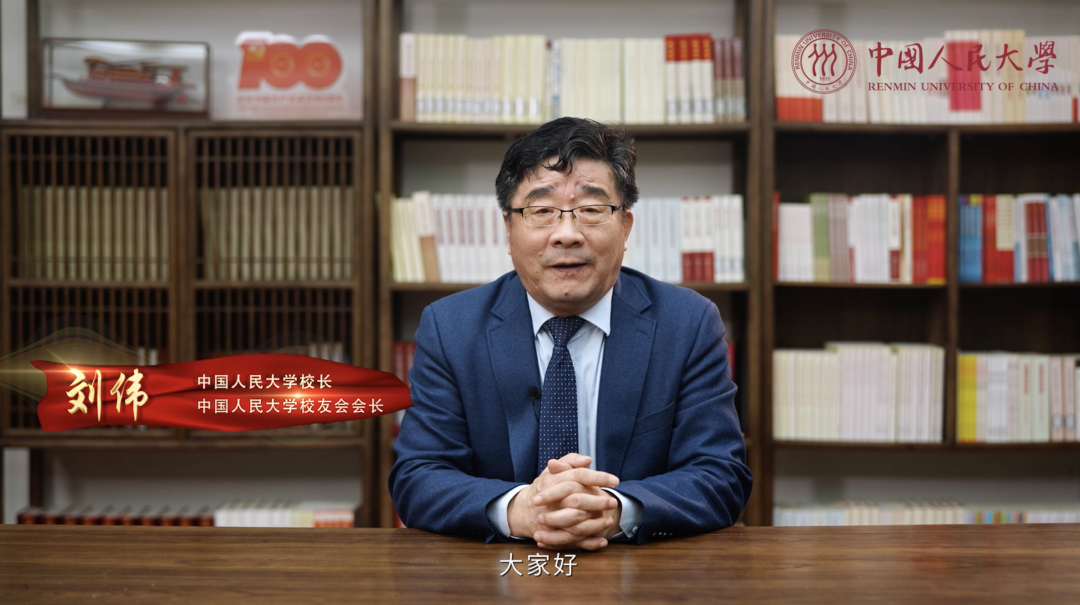
Video Address by Liu Wei, President of Renmin University of China
In his video address, President Liu Wei first expressed his appreciation for Mingde Forum and his gratitude to the RUC North America Alumni Association for overcoming numerous challenges and making dedicated efforts to organize the Forum amid the pandemic.
He noted that the COVID-19 pandemic remained unresolved, while the global economic recovery faced considerable uncertainty. How to accurately understand global economic trends, expand the breadth and depth of international cooperation in key areas, and further strengthen global trade, economic cooperation, and people-to-people exchanges had increasingly become issues of common concern to the international community.
President Liu said that against the backdrop of the global economic recovery unfolding alongside the continuing pandemic, this year's Forum focused on key issues including carbon peaking and carbon neutrality and the outlook for the global macroeconomy. Through dialogue and discussion, the Forum sought to work together to address the risks and challenges of globalization and contribute ideas and insights to economic and social development in the post-pandemic era.
He also noted that, as a signature event of the RUC North America Alumni Association, the Forum provided overseas alumni with a valuable opportunity to reconnect, learn from one another, and exchange ideas. He encouraged experts and alumni to focus on major strategic issues, broaden their perspectives, and explore opportunities for cooperation and development, contributing new “RUC insights” to international economic and trade cooperation and world peace and development.
With Renmin University of China approaching its 85th anniversary in 2022, President Liu invited alumni to return to campus, revisit their years at RUC, and look ahead to the future. Standing at a new historical juncture, he said, the University would always stand together with its alumni, no matter how far apart they might be, upholding the ideal of “One World, One Family” and working to advance national development and the building of a community with a shared future for humanity.
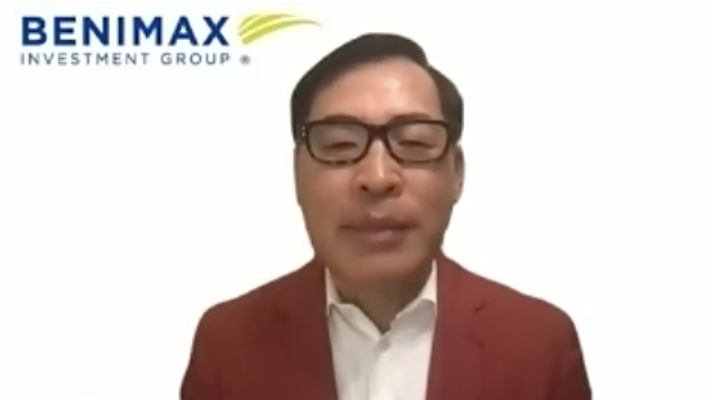
Opening Remarks by Dawson Lee, Chairman of the RUC North America Alumni Association
Dawson Lee, Chairman of the RUC North America Alumni Association, delivered the opening remarks. He warmly welcomed all guests and alumni and thanked the participating scholars and experts for taking time from their busy schedules to share their insights, knowledge, and perspectives.
Dawson Lee noted that the pandemic over the previous two years had brought significant challenges to people's lives, work, and studies. Nevertheless, the RUC North America Alumni Association had remained active rather than stepping back. It had expanded its online programming and provided assistance, within its capacity, to alumni in North America as well as alumni coming to the region to study.
He encouraged alumni to actively participate in the four panel discussions at this year's Forum, engage with scholars and practitioners on a wide range of topics, and learn and grow together through dialogue.
Wu Yafeng, President of the RUC North America Alumni Association, noted that in response to the enormous challenges brought about by the pandemic, the Association had made extensive use of digital technologies to broaden alumni connections, enrich alumni services, and increase the frequency of its activities.
In 2021 alone, the Association independently or jointly organized 20 events under the “Mingde 2021” program, covering a wide range of topics including international relations, economics and finance, study and employment opportunities, entrepreneurship and innovation, social equity, and everyday life and well-being. These activities helped strengthen connections among alumni and expand services to the alumni community, receiving positive feedback and generating meaningful social impact.
In particular, this year's Mingde Forum set new records across several dimensions, including the number of panel sessions, participating guests, and audience members. This reflected not only the growing cohesion and execution capabilities of the Association's team, but also the recognition of the Mingde Forum brand, the quality of RUC alumni, and the reputation of Renmin University of China.
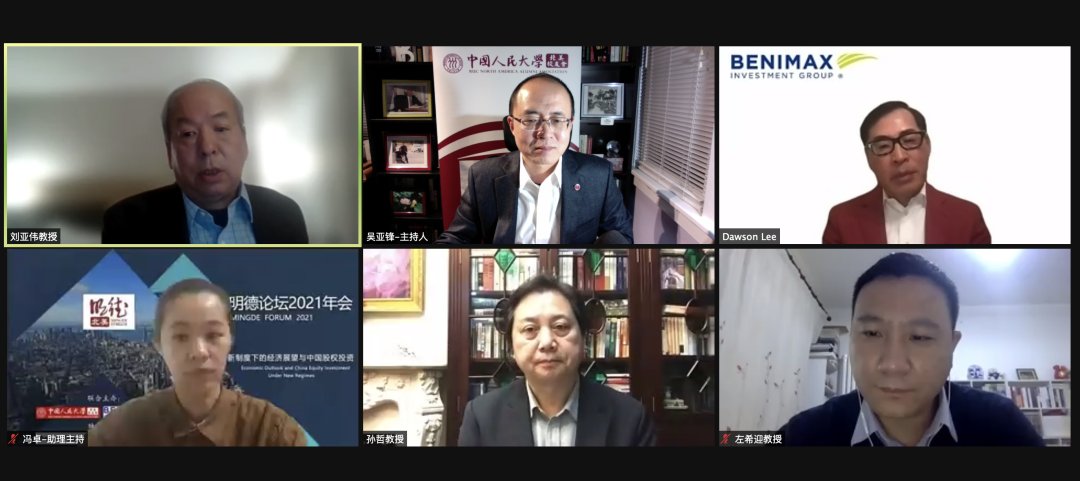
Session 1: China-U.S. Relations
Drawing on RUC's Spirit of “Seeking Truth from Facts” to Reframe China-U.S. Relations with a Pragmatic Approach
Among bilateral and multilateral relationships around the world, China-U.S. relations have long been of particular importance to RUC alumni and the overseas Chinese community. The state and trajectory of China-U.S. relations also have a direct bearing on economic decision-making and investment judgments.
Moderated by Wu Yafeng, the discussion featured Liu Yawei, Senior Advisor on China Affairs at The Carter Center; Sun Zhe, Co-Director of the China Program at Columbia University; and Zuo Xiying, Professor at the School of International Studies, Renmin University of China, and an RUC alumnus.
The speakers shared their observations and assessments on strategic policy, economic and trade relations, technological competition, people-to-people exchanges, national security, and other issues.
Describing the evolution of China-U.S. relations over the past several years, the speakers first turned to two lines from classical Chinese poetry. The relationship had once been like “a storm approaching, with wind filling the tower,” while today it seemed more like “watching the flowers fall, helpless to stop them.”
In recent years, U.S. policy toward China has undergone major changes, with the framework of “compete, confront, cooperate” emerging as a defining approach. China has responded with corresponding adjustments and proposed mutual respect, peaceful coexistence, and win-win cooperation as the three pillars of bilateral relations. Yet the two sides have not reached a common understanding on how their relationship should develop.
People-to-people exchanges between China and the United States have declined sharply in recent years, while substantive cooperation has become increasingly rare. Competition has intensified and areas of friction have expanded. The speakers noted that the strategic competition between China and the United States might only be at an early stage. China's gains from globalization have significantly altered the balance of power between the two countries, bringing bilateral relations into a critical period of power transition. A more stable relationship, they suggested, may emerge only after this transition has run its course.
The speakers emphasized that the immediate priority was to manage China-U.S. relations responsibly. Both sides need to take a long-term view and hope that their leaders can draw lessons from the statesmen who helped break the ice between China and the United States decades ago, taking creative steps to ease deadlock and set aside disputes so that bilateral relations can move forward.
They also stressed the importance of correcting both excessive fear in the United States and excessive confidence in China, particularly the underlying misconceptions represented by these attitudes, while overcoming double standards on both sides. The speakers expressed hope that China and the United States could identify areas for cooperation and demonstrate to their own people and the world that both countries could act as responsible major powers.
The discussion also emphasized that China-U.S. relations affect not only China's national development, but also people's everyday lives, work, and studies. Young people and RUC alumni were encouraged to take greater responsibility for communication and constructive dialogue, remaining confident without becoming complacent and adhering to a pragmatic, fact-based approach.
At the national and societal levels, the speakers argued for a more objective assessment of China-U.S. relations, starting from reality and recognizing not only the challenges in the bilateral relationship but also China's own problems. The willingness to acknowledge and address those problems, they said, is fundamental to maintaining resilience and strength.
Written by Zhuo Feng
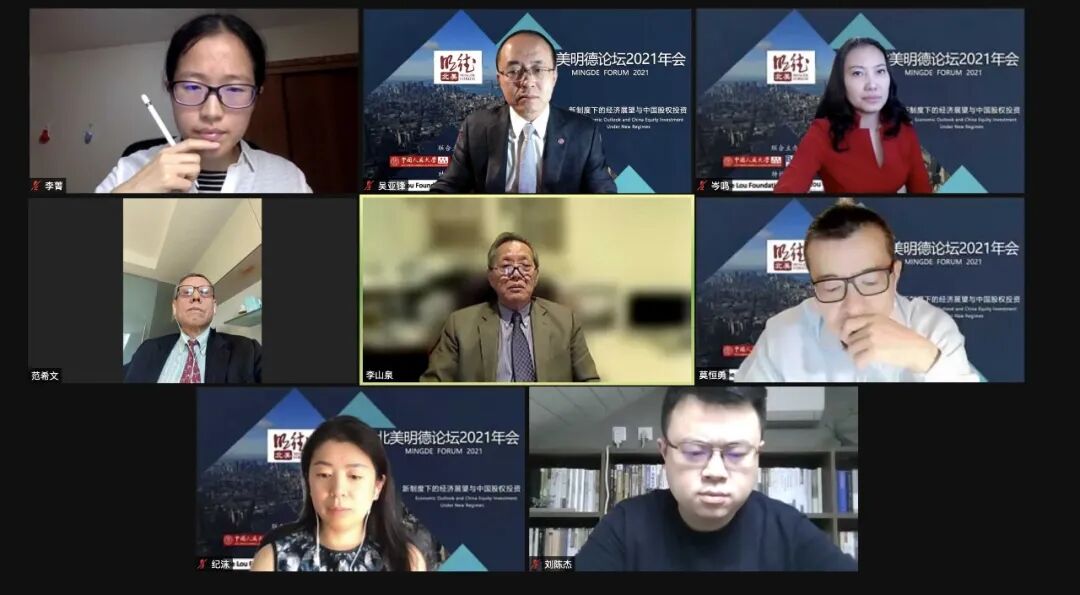
Session 2: Global Macroeconomic Outlook
The Pandemic Continues to Shape the Global Economy; China's Growth in 2022 May Exceed Market Expectations
A regular feature of Mingde Forum's annual meeting, the Global Macroeconomic Outlook session reflects both the theoretical expertise and practical experience of RUC alumni and has consistently been one of the Forum's most closely followed discussions.
This year's session brought together Li Shanquan, Senior Portfolio Manager at Invesco and an RUC alumnus; Fan Xiwen, Independent Director and Special Advisor to the Board of Directors at Zhonghe and an RUC alumnus; Mo Hengyong, Chief Economist at American International Group; Ji Mo, Chief China Economist at Fidelity International and an RUC alumna; Liu Chenjie, Chairman of Wangzheng Capital; and Cen Ming, Head of Multi-Asset Strategy at Saudi Arabia's Public Investment Fund, who also moderated the session.
The speakers discussed the global economy, financial markets, the low-carbon transition, and investment opportunities.
They noted that the world had entered a new stage of living with the virus, but uneven vaccine distribution and the emergence of new variants continued to create uncertainty. The pandemic remained one of the most important factors shaping global development, government policies, and economic trends.
During the pandemic, governments around the world implemented unprecedented fiscal and monetary policy measures, with extraordinary effects on economies and markets. As the global recovery continued, central banks in a number of countries began adjusting their monetary policies, and policy divergence became increasingly pronounced.
The speakers noted that a wide range of factors—including the pandemic, fiscal and monetary policies, deglobalization, trade and tariffs, an increasing emphasis on national security, restructuring of global supply chains, increasingly stringent emissions-reduction policies, and broad-based inflation expectations—were contributing to inflationary pressures.
Some supply-side inflationary pressures had begun to ease, although the pace remained relatively slow. Demand-related factors, however, were expected to continue supporting inflation, potentially keeping inflation above policy targets even into 2023. This could prompt the Federal Reserve to accelerate monetary tightening, completing its tapering process earlier than expected and potentially raising interest rates two or three times in 2022. At the same time, long-term inflation expectations remained relatively subdued.
Based on a baseline scenario in which economic growth had reached a trough while policy support had reached a peak, the speakers discussed the expected trajectories of U.S. equities, U.S. Treasury bonds, the U.S. dollar, and commodities in 2022.
They suggested that the Federal Reserve's rate-hiking cycle might coexist with continued gains in U.S. equities, with the S&P 500 potentially testing 5,000 points. Factors including the pandemic, climate change, labor conditions, and demographics could keep the 10-year U.S. Treasury yield volatile, while the dollar was expected to remain strong during the rate-hiking cycle.
For China, the speakers expected 2022 to be a year of moving from policy correction toward greater stability. The recently concluded Central Economic Work Conference had established an important policy tone for the coming year, while additional policy support could help China's economic growth outperform current market expectations. They expected valuations in the A-share market to expand, at least during the first half of 2022, and viewed China's market as offering attractive investment opportunities in terms of earnings growth and quality as well as the broader economic structure.
The speakers also used detailed data analysis to explore investment opportunities arising from policies aimed at carbon peaking and carbon neutrality, including solid-state batteries, residential energy storage, energy-efficient computing, carbon capture and carbon accounting, carbon sinks, and hydrogen energy.
Written by Jing Li
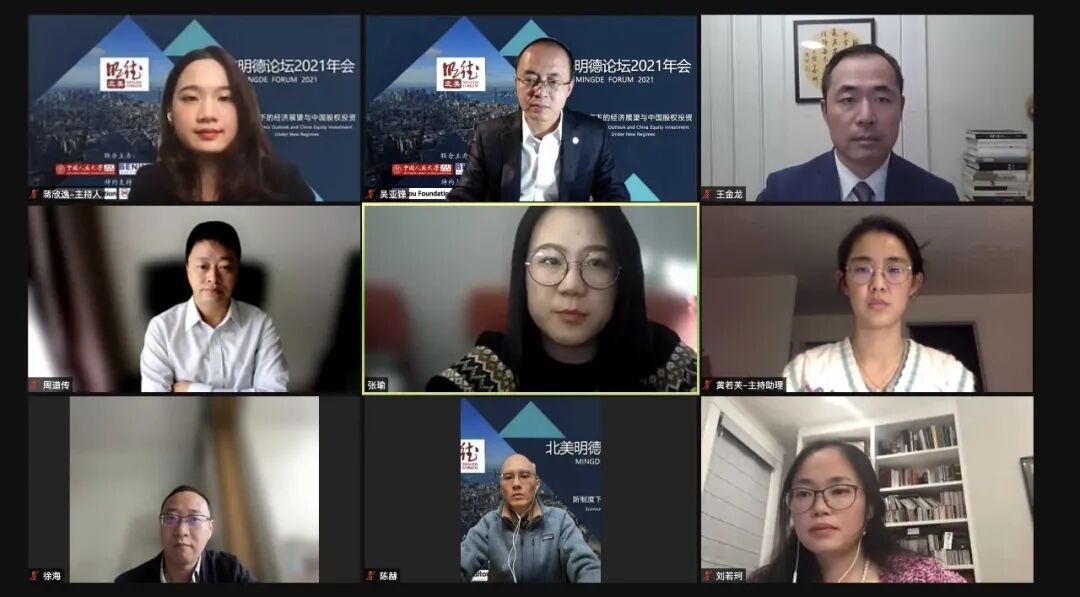
Session 3: Chinese Equity Investment
U.S. Equities Remain at Elevated Levels; Chinese Companies Returning to Hong Kong May Become a Long-Term Trend
International relations, economic development, and regulatory regimes can have a significant impact on equity markets. Whether China's A-share market was poised for a rebound, whether Hong Kong-listed stocks represented a new opportunity, and whether U.S.-listed Chinese companies continued to offer investment value were among the questions attracting considerable attention.
The session featured Zhou Daochuan, Investment Director at a Singapore-based family office and an RUC alumnus; Xu Hai, Founding Partner of Honghu Zhiyuan Fund and an RUC alumnus; Wang Jinlong, CEO of Haitou Global; Zhang Yu, Chief Macro Analyst at China Renaissance Securities and an RUC alumna; Chen He, CEO of GMBP Capital; and Liu Ruoke, Partner at Morgan Lewis and an RUC alumna. Jiang Xinyi, Vice President of the RUC North America Alumni Association and an RUC alumna, moderated the discussion.
The speakers emphasized that capital markets should be examined from a perspective broader than finance alone. Problems should be studied by integrating theory with practice, while answers should be considered from a developmental and long-term perspective. Capital markets are not only barometers of economic conditions, they are also arenas in which capital from different countries competes and interacts.
Looking further ahead, the speakers suggested that as China's A-share and Hong Kong markets continued to develop, the markets would become more mature and open, their mechanisms more standardized and robust, and the quality of listed companies and institutional investors would continue to improve. The two markets could increasingly complement one another and become major destinations for Chinese companies seeking to raise capital and for investors seeking exposure to Chinese companies.
Looking toward 2022, the speakers noted that if the Federal Reserve accelerated monetary tightening and began raising rates around mid-year, the dollar could remain strong and U.S. equities could continue to trade at elevated levels. Capital returning to the United States could put pressure on liquidity in emerging markets.
From a market-momentum perspective, Hong Kong equities were then trading at lower levels than U.S. equities. If China's industry regulatory policies were to ease significantly in 2022, the speakers suggested that there could be periods of investment opportunity.
They also noted that amid changing international conditions and the various impacts of China-U.S. tensions on capital markets, the return of U.S.-listed Chinese companies to Hong Kong could become a longer-term trend. At the same time, the Hong Kong market faced significant liquidity constraints and remained much smaller than the U.S. equity market.
The speakers observed that China's internet sector had attracted substantial investor attention in recent years and had experienced strong market growth, but had also faced significant challenges in 2021. While consumer-facing, or 2C, businesses had received greater attention and were more representative of the sector, business-to-business, or 2B, businesses could have greater potential and scale over the longer term. They would place greater emphasis on product quality and stability and seek to convert competitive advantages and strong founding teams into sustainable profitability.
The high valuations and recent volatility of financial technology companies suggested that risk-hedging had become increasingly important and that extreme market conditions could emerge. Nevertheless, the speakers believed the broader development trend of emerging markets remained positive.
They also discussed the reasons behind China's regulatory push, including external demands for greater transparency in corporate disclosures as well as domestic concerns related to energy consumption. In an era when entire industries could experience broad-based growth, companies needed to take responsibility for their positive externalities. When issues of efficiency and public welfare were involved, capital could not be expected to exercise absolute control.
The speakers suggested that ultimately, only high-quality companies would be able to distinguish themselves amid increasingly complex regulatory requirements. For consumer-facing internet companies, regulatory boundaries could be more difficult to navigate because of rapid industry evolution and the potential for experimentation to encounter sensitive areas. By contrast, B2B businesses generally faced fewer such boundary issues, with their transformation focusing more on moving traditional offline operations online.
Written by Ruofu Huang
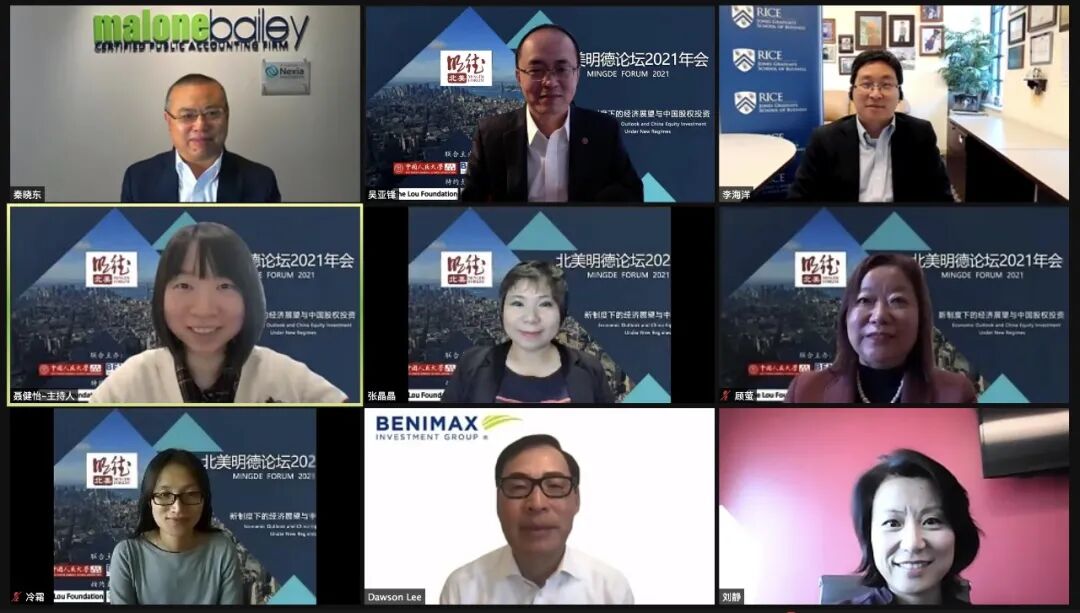
Session 4: Investment Outlook for the U.S. South
RUC Alumni and Industry Leaders Gather in the U.S. South, Highlighting Opportunities in the Sun Belt
In November, the RUC North America Alumni Association Council passed a resolution to establish the Houston Chapter of the RUC North America Alumni Association as a central platform for bringing together and serving alumni in the U.S. Southwest.
Taking the establishment of the Houston Chapter as an opportunity, the annual Forum added a special Houston session, inviting prominent RUC alumni and representatives of the Chinese community in the southern United States to discuss the development advantages and investment opportunities of the Sun Belt.
The session featured Dawson Lee, President of Benimax Investment Group and an RUC alumnus; Li Haiyang, Professor at the Jones Graduate School of Business at Rice University and an RUC alumnus; Qin Xiaodong, Audit Partner at MaloneBailey LLP and an RUC alumnus; and Zhang Jingjing, Chief Global Strategy Officer at Integrated Viral Protection Solutions. Nie Jianyi, Secretary-General of the Houston Chapter and an RUC alumna, moderated the session.
The speakers noted that the political and economic environment in the southern United States was dynamic and had demonstrated strong momentum across a range of areas. States such as Texas benefited from multicultural communities, economic expansion, business-friendly policies, and population growth, creating favorable conditions for continued development.
They said that even with expectations of higher interest rates in 2022, real estate investment in the southern United States remained strong, while rental demand in major cities continued to be robust.
Several factors were behind this trend. First was politics: political and economic conditions influence one another, making it important for investors to understand the policy environment. Policies in many southern states had helped attract investors. Second was demographics: southern states led the nation in net population growth across many major metropolitan areas. Zero-state-income-tax policies in some states also attracted investors and residents.
A favorable investment environment, tax advantages, and attractive living conditions had encouraged major corporations to relocate southward, bringing employment opportunities, population inflows, and new investment opportunities.
Turning to internationalization and Chinese companies investing overseas, the speakers drew on the CAGE Framework, examining how Chinese companies should select overseas destinations based on four dimensions: Cultural Distance, Administrative/Political Distance, Geographic Distance, and Economic Distance.
They noted that the development of the internet had made internationalization increasingly regional in nature. For Chinese companies, geographic and economic distance had become less significant, while cultural and political factors had become increasingly important to successful integration into local markets.
They suggested that companies could adopt a 3C strategy—Cultural Adaptability, Compliance, and Collaborations—to better manage local employees and operations.
The speakers also reviewed the history, trends, and future challenges surrounding Chinese companies listing in the United States. The principal routes for Chinese companies seeking U.S. listings included IPOs, SPACs, and reverse mergers. Due to tighter policies and increased U.S. regulatory scrutiny, IPOs and reverse mergers faced greater obstacles, while SPAC listings became a particularly prominent route during the pandemic.
The speakers noted that despite deterioration in China-U.S. relations, companies continued to have financing needs, and SPACs could still present significant market opportunities over the following two years. Companies seeking to go public needed to pay close attention to legal risks, while investors should exercise greater caution when investing in U.S.-listed Chinese companies.
The session also covered technological innovation, digital transformation, and the future of management.
Written by Rui Wang
Closing Remarks
Liu Jing, Vice President of the RUC North America Alumni Association, delivered the closing remarks, congratulating everyone on the successful conclusion of the seventh Mingde Forum annual meeting series.
She expressed appreciation to Renmin University of China for its longstanding support of Mingde Forum; to all alumni, guest speakers, and partner university alumni organizations for their participation and support; to the Association's leadership and alumni volunteers for their hard work and meticulous preparation; and to all alumni, friends, and new acquaintances who actively participated in the events.
The annual meeting was hosted by the RUC North America Alumni Association, co-hosted by Benimax Investment Group, with special support from The Lou Foundation and Haitou Global. The Forum also received strong support and assistance from relevant departments and schools of Renmin University of China, Chinese-American alumni enterprises, Chinese community organizations in the United States, and alumni associations of partner universities.
Written by Ruofu Huang | Reviewed by Wu Yafeng | Layout by Xuejiao Feng

Mingde Forum 2021 Organizing Committee
Advisors: Dawson Lee, Yue Jingsheng, Liu Jing
Chair: Wu Yafeng
Committee Members: Feng Xuejiao, Feng Zhuo, Gu Ying, Huang Beiqing, Huang Ruofu, Jiang Xinyi, Lai Yun, Leng Shuang, Li Jiawei, Li Jing, Luo Kan, Nie Jianyi, Wang Rui