Keeping Pace with a Changing World | Mingde Forum 2022 Held in New York
Nov 21, 2022 · 0 views
“Though mountains and rivers may share the same rain, the moon shines equally on both sides.”
With these words from Professor Du Peng, Vice President of Renmin University of China, in his video address, Mingde Forum 2022, hosted by the RUC North America Alumni Association with joint support from Beijing United Information Technology Co. and Benimax Investment Group, officially opened in New York.
Under the theme “A Changing World: The Recovery and Reshaping of Global Politics and Economy,” the annual meeting adopted a dual format of online seminars and an in-person conference, focusing on China’s economic recovery, global economic trends, the outlook for financial markets, and the restructuring of the global geopolitical landscape. The Forum brought together a wide range of experts and alumni for an intensive exchange of ideas.
Online Seminar
Focusing on China
On the evening of November 18, U.S. Eastern Time, the online session of Mingde Forum 2022 was held, moderated by Wu Yafeng, President of the RUC North America Alumni Association.
In opening the session, Wu explained the significance of the theme. He noted that “a changing world” carries two meanings: first, the broad historical transformation represented by the profound changes unseen in a century; and second, the major changes that the world is experiencing and about to face in areas including pandemic control, economic development, geopolitics, and international relations.
“What do these changes mean, and how should we prepare for them? From both the macro and micro perspectives, these questions are at the heart of this year’s annual meeting,” Wu said.
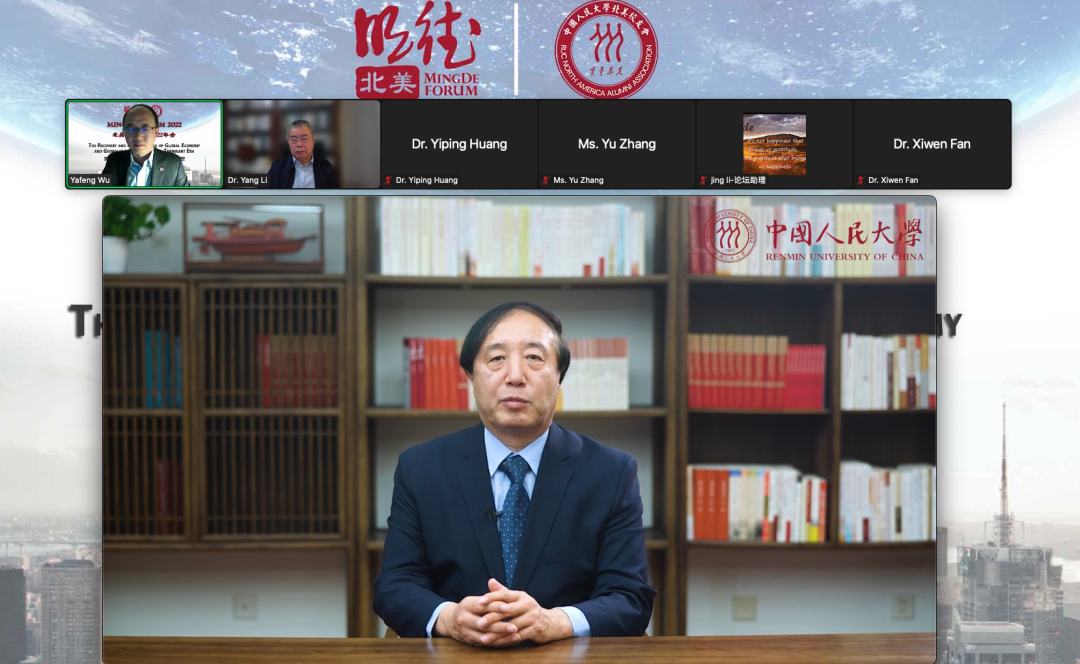
Video Address by Vice President Du Peng
Professor Du Peng, Vice President of Renmin University of China, expressed strong support for the Forum in his video address.
He noted that Mingde Forum 2022 was being held against the backdrop of profound changes unseen in a century, at a time when the global economy faced major challenges and international politics was marked by considerable instability. The Forum sought to examine economic recovery and the restructuring of geopolitics in a changing world.
“Alumni around the world will work together to address the risks and challenges of globalization and contribute their wisdom and strength to economic and social development in the post-pandemic era,” Professor Du said.
He added that the world had entered a new period of turbulence and transformation, with instability and uncertainty increasing significantly. This made it particularly important to address the fundamental questions of our time: What is happening to the world, and where is humanity heading?
Professor Du said the Forum provided a valuable opportunity for alumni in China and abroad to reconnect, learn from one another, and exchange ideas. He encouraged experts and alumni to focus further on major strategic issues, broaden their perspectives, build international communication networks, and strengthen their ability to contribute to global dialogue.
Keynote Addresses
The keynote session was moderated by Fan Xiwen, Founding President of the RUC North America Alumni Association. Professor Li Yang, Chairman of the National Institution for Finance & Development, and Professor Huang Yiping, Deputy Dean of the National School of Development at Peking University, delivered keynote addresses.
Professor Li Yang spoke on “The Long Road Ahead for Improving the Income Distribution System.” Drawing on data from China’s national balance sheet, he examined key elements of the income distribution system, including labor compensation, primary distribution, redistribution, property income, and social security and welfare transfers.
He offered a series of recommendations for improving the income distribution system, including increasing the share of wage income in primary distribution, expanding property income for households, and strengthening the role of government fiscal policy—including taxation and public expenditure—in the redistribution of national income. He also advocated greater use of technology, the development of the platform economy, support for flexible employment, and measures to improve people's well-being.
Professor Huang Yiping spoke on “Toward a New Model of Economic Development.” Drawing on recent developments in exports, investment, and consumption—the traditional “three drivers” of China’s economic growth—he identified three major challenges facing China at its new stage of development: the transition toward innovation-driven growth, the shift from a demographic dividend toward an aging population, and the transition from globalization toward deglobalization.
He proposed a new growth model centered on innovation and productivity gains, greater emphasis on domestic demand and green development, and reduced reliance on the real estate market.
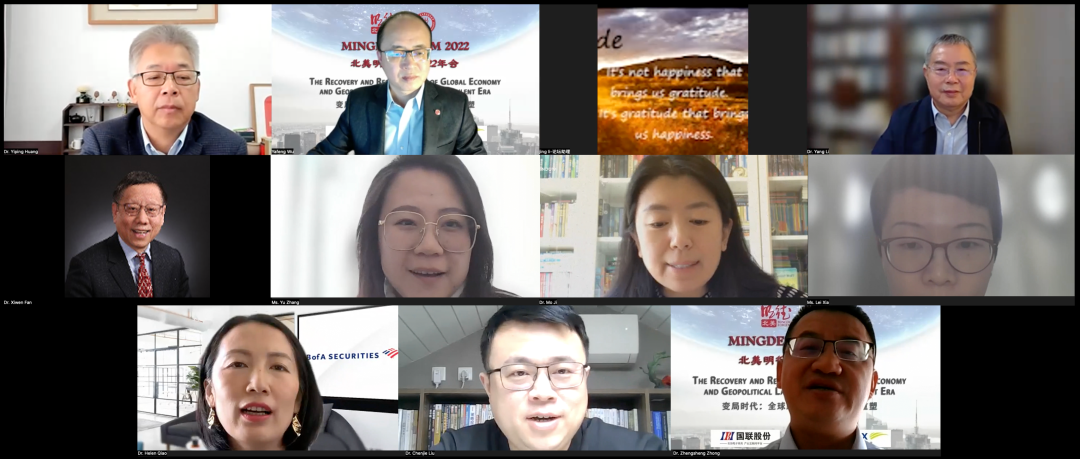
北Panel Discussion: China’s Road to Economic Recovery
Wu Yafeng moderated the panel discussion “China’s Road to Economic Recovery.” Panelists included Ji Mo, former Chief China Economist at Fidelity International; Liu Chenjie, Investment Director at Wangzheng Capital (Hong Kong); Qiao Hong, Chief Greater China Economist at Bank of America; Xia Lei, Chief Economist at Guohai Securities; Zhang Yu, Chief Macro Analyst at China Renaissance Securities; and Zhong Zhengsheng, Chief Economist at Ping An Securities.
Drawing on recent macroeconomic, industry, and regional data, the panelists identified “security” and “high quality” as two central themes amid the profound changes taking place in the global environment. They emphasized that balancing pandemic control and economic growth remained a key priority and expressed cautiously optimistic expectations for the Chinese economy in 2023.
Panelists expected China’s economic growth in 2023 to be somewhat stronger than in 2022, while exports could be slightly weaker as overseas demand declined. They noted that risks and opportunities would coexist, with structural opportunities emerging in areas including energy security, technological security, food security, political security, and social security.
Over the medium and long term, the new energy and technology sectors were expected to be among the fastest-growing industries during the 14th Five-Year Plan period. In the stock market, panelists noted that A-shares had already become relatively attractive to domestic investors, while their attractiveness to international investors still had room to improve.
At the conclusion of the panel, Wu Yafeng presented a dot plot showing the six panelists’ forecasts, collected before the Forum, for China’s GDP growth, CPI, and RMB exchange rate over the following year.
In-Person Conference
Looking to the World
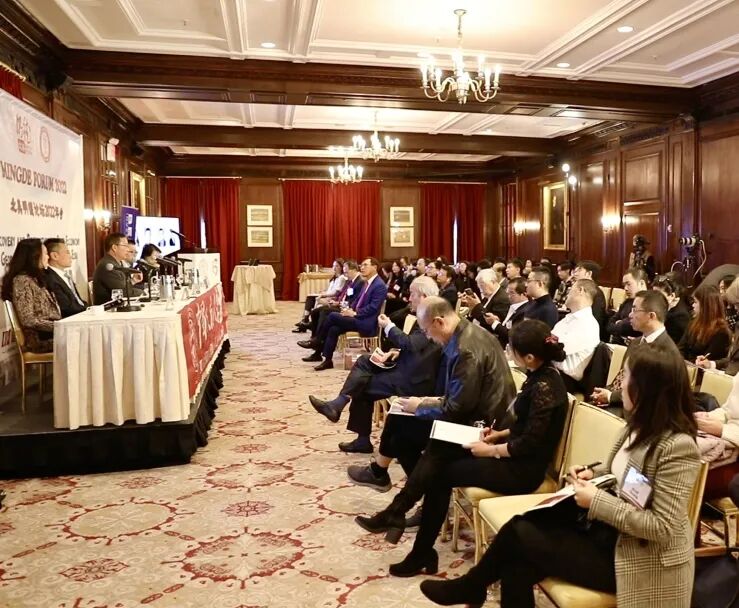
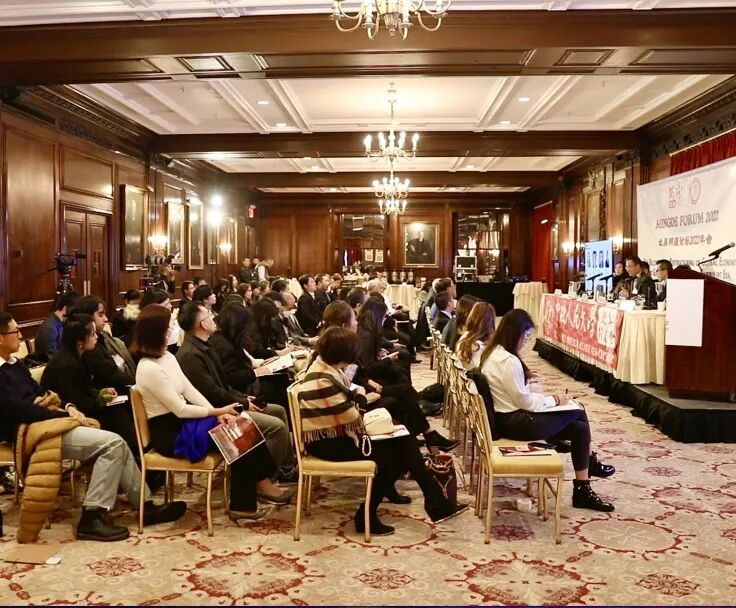
On the afternoon of November 19, U.S. Eastern Time, the in-person session of Mingde Forum 2022 was held at the Harvard Club of New York City, moderated by Jiang Xinyi, Vice President of the RUC North America Alumni Association.
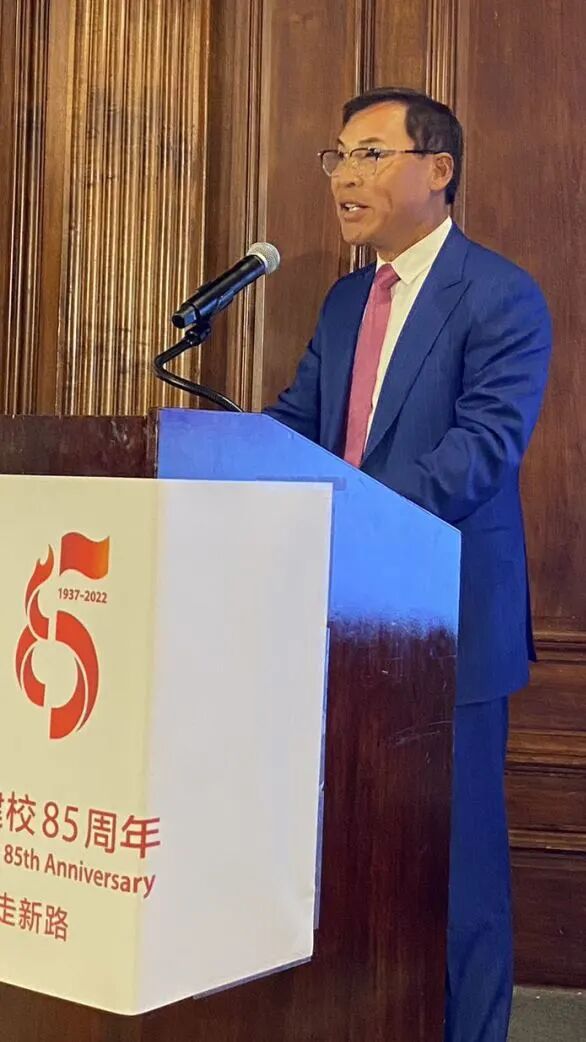
Dawson Lee, Chairman of the RUC North America Alumni Association and President of Benimax Investment Group, delivered the opening remarks.
He noted that the most recent in-person Mingde Forum had taken place in 2019. Over the previous three years, the pandemic had shifted most activities online, but this had also expanded their geographic reach and increased their frequency.
He said the Association had remained committed to supporting RUC alumni across North America in their studies, careers, and daily lives. Since the beginning of the pandemic, it had organized more than 20 online seminars covering topics including macroeconomics, public health, career development and job searches, as well as a special International Women’s Day event focused on women on Wall Street.
Despite the turbulence in global politics and economics, Li said, a number of recent positive signals had also given everyone reason to look forward to the future.
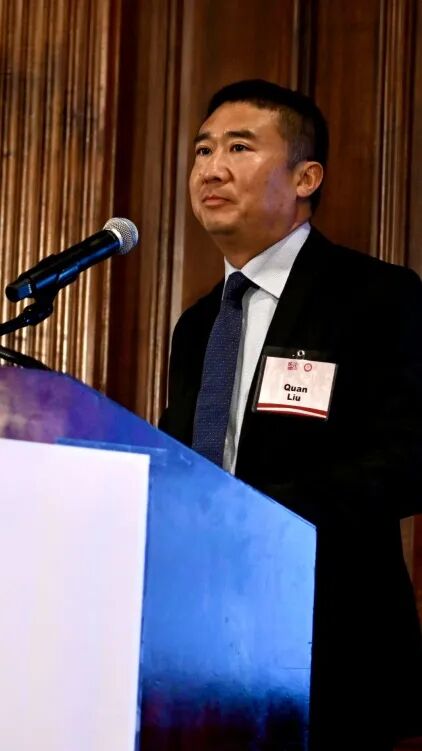
Liu Quan, Advisor to the RUC North America Alumni Association and Co-Founder and Chairman of Beijing United Information Technology Co., said in his remarks:
“In recent years, the international landscape has undergone profound changes. The COVID-19 pandemic has caused serious humanitarian difficulties and economic losses; global inflationary pressures have intensified; fiscal and monetary policies in major economies have generated significant spillover effects; financial markets have become volatile; and the business environment has changed dramatically. International competition and confrontation have also had a profound impact on each of us. These are issues that concern everyone, and as entrepreneurs, we feel this anxiety deeply and are paying close attention.”
He expressed his hope that the speakers’ insights would provide meaningful inspiration and useful perspectives for navigating an increasingly uncertain future.
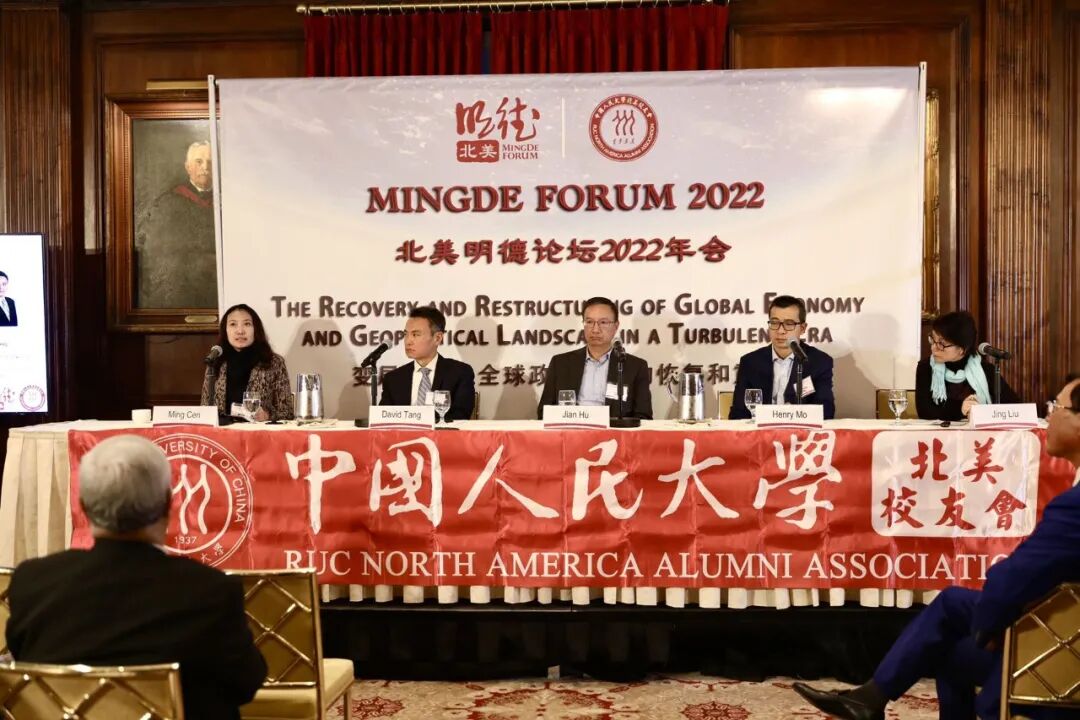
Panel Discussion: Global Economic Trends and Financial Market Outlook
Liu Jing, Vice President of the RUC North America Alumni Association, moderated the panel discussion “Global Economic Trends and Financial Market Outlook.”
Panelists included Cen Ming, Head of Multi-Asset Portfolio Strategies at the Public Investment Fund of Saudi Arabia; Hu Jian, Managing Director at Moody’s Investors Service; Mo Hengyong, Chief Economist at Corebridge Financial; and Tang Qi, Vice President at EquiTrust Life Insurance Company.
The panelists believed that it would take time for U.S. inflation to moderate and that the Federal Reserve would continue raising interest rates before inflation showed a sustained decline. At the same time, deteriorating balance sheets among consumers and businesses raised concerns about an increasingly difficult-to-avoid recession.
Regarding financial markets, panelists noted that in a rising-rate environment, floating-rate products could outperform fixed-rate products, while real estate could serve as a useful hedge against inflation. Private debt and private placements were becoming increasingly popular and represented emerging trends, although such asset classes were generally more suitable for qualified individual and institutional investors.
Emerging markets were also discussed as an important asset class because of their potential to generate significant alpha. However, panelists emphasized that investors needed specialized knowledge to distinguish attractive opportunities from less compelling ones.
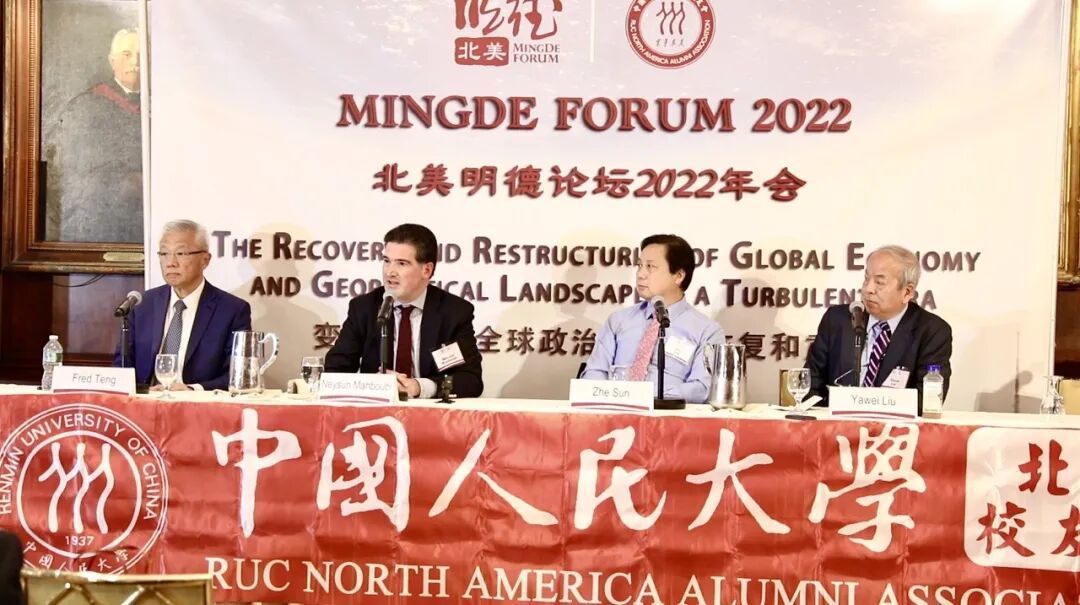
Panel Discussion: Restructuring of the Global Geopolitical Landscape
Professor Liu Yawei, Senior Advisor on China Affairs at The Carter Center, moderated the panel discussion “Restructuring of the Global Geopolitical Landscape.”
Panelists included Ma Ruixin, Researcher at the Center for the Study of Contemporary China at the University of Pennsylvania; Sun Zhe, Co-Director of the China Program at Columbia University’s School of International and Public Affairs; and Teng Shaojun, President of the U.S.-China Public Affairs Association.
The panel explored a range of pressing issues, including opportunities and challenges in China-U.S. relations, the historical origins and future trajectory of the Taiwan issue, key developments in the Russia-Ukraine conflict, and the respective positions of China and the United States.
Participants expressed hope that Washington and Beijing would assume the responsibilities expected of major powers, demonstrate the corresponding statesmanship, and set aside ideological and geopolitical obstacles that could push bilateral relations toward conflict. They called for both countries to make their own contributions to global peace and prosperity.
The meeting between the leaders of China and the United States in Bali shortly before the Forum was viewed by participants as a positive signal in a period of profound change, offering grounds for cautious hope about the future.
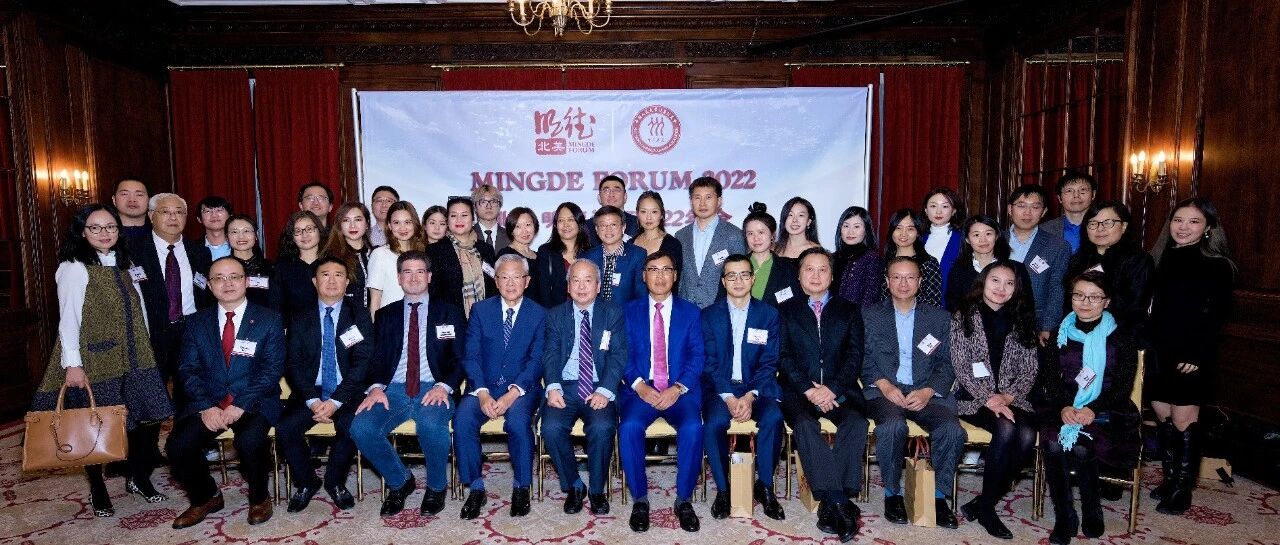
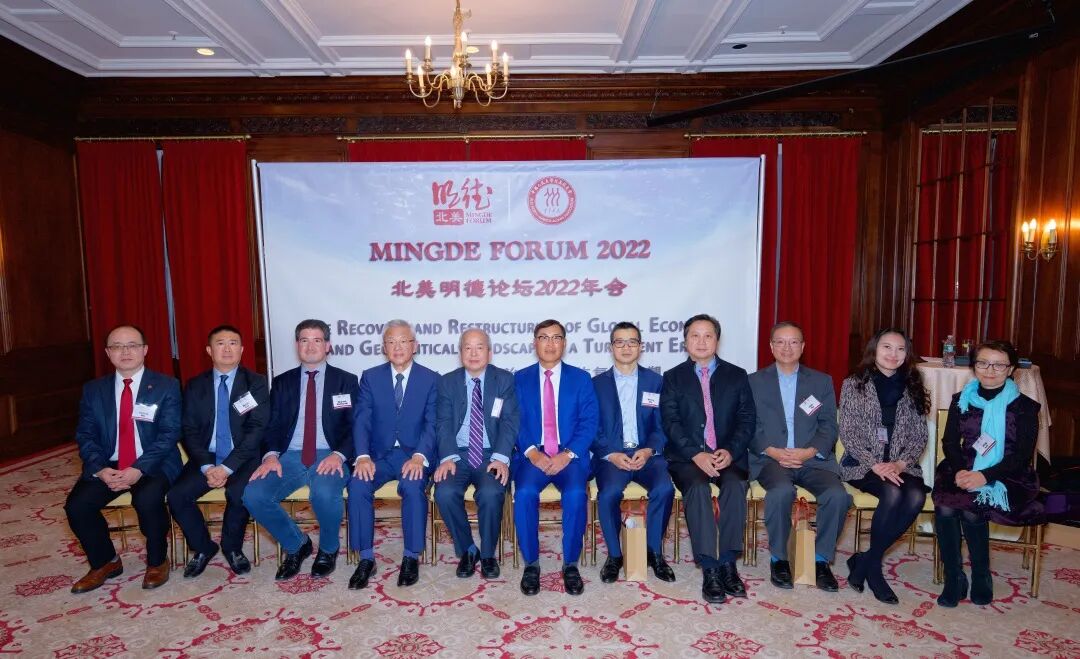
Nearly 100 RUC alumni from across North America—including New York, Massachusetts, Connecticut, Virginia, Washington, Michigan, Illinois, Pennsylvania, Georgia, and Toronto, Canada—along with friends and guests from various sectors in the New York area, participated in the Forum.
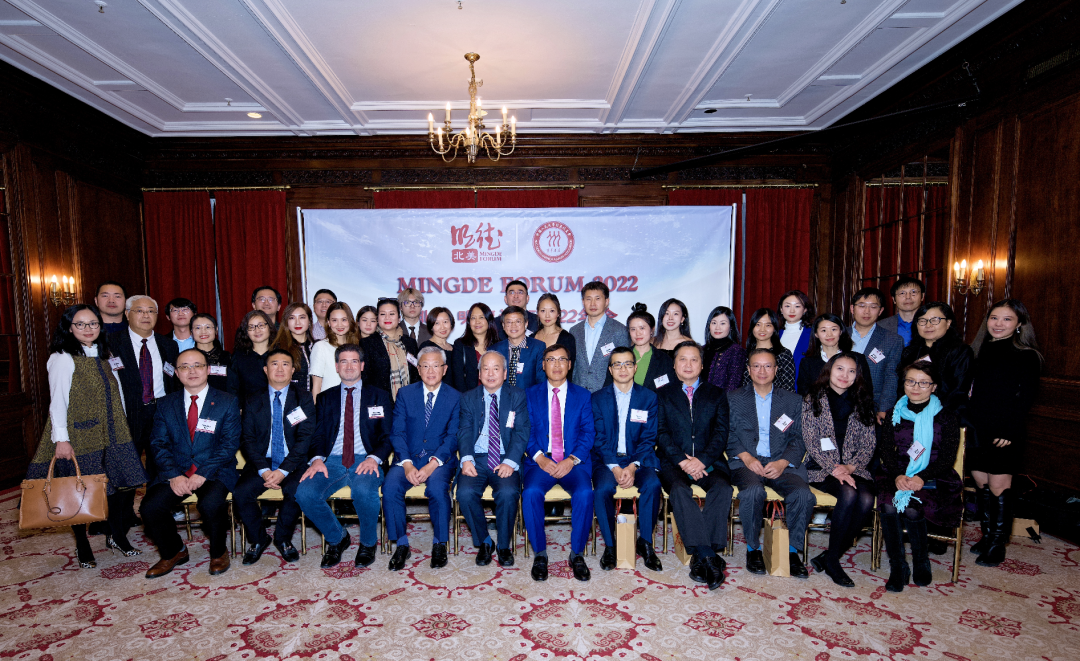
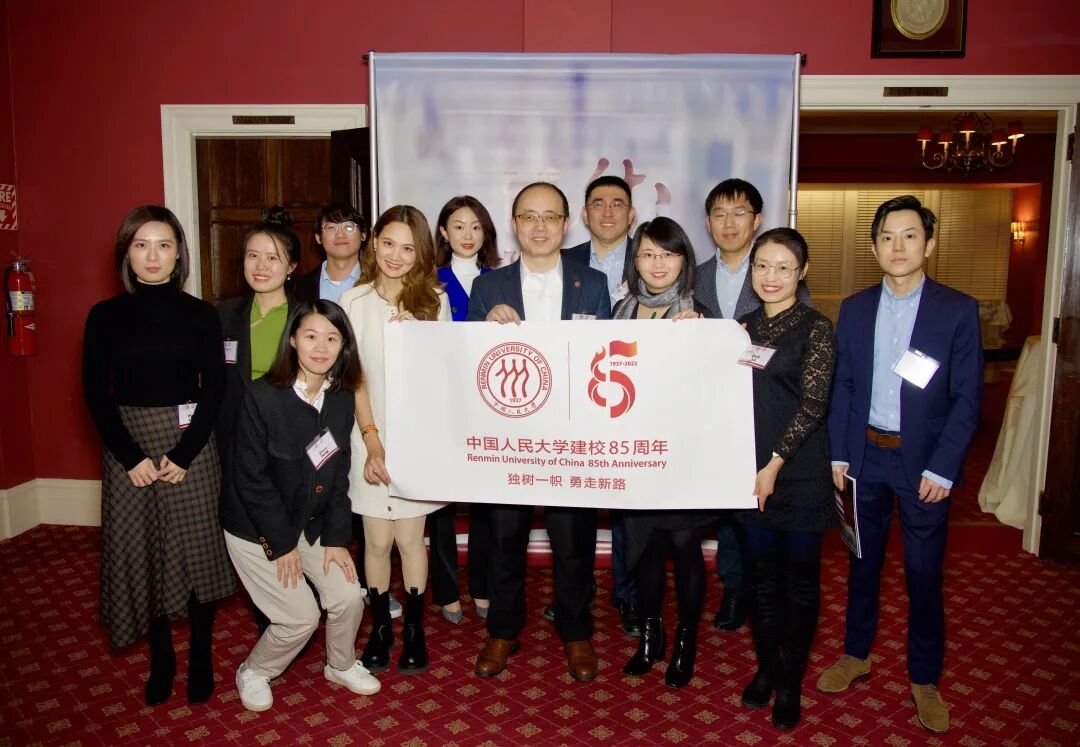
Mingde Forum 2022 Organizing Committee
Advisors: Fan Xiwen, Dawson Lee, Li Shanquan, Liu Jing, Liu Quan, Wang Yuting, Yue Jingsheng, Zhang Peibei, Zhao Lixin
Chair: Wu Yafeng
Committee Members: Feng Xuejiao, Feng Zhuo, Huang Beiqing, Jiang Xinyi, Lai Yun, Li Jing, Li Yang, Lin Ping, Lu Cuili, Luo Kan, Nian Yiqun, Pan Qichang, Ren Ruijing, Sun Siyang, Ye Jian, Zhang Yong, Zhu Hongjie