
Make Mingde a Habit | Mingde Forum 2018 Successfully Held
Nov 6, 2018 · 0 views
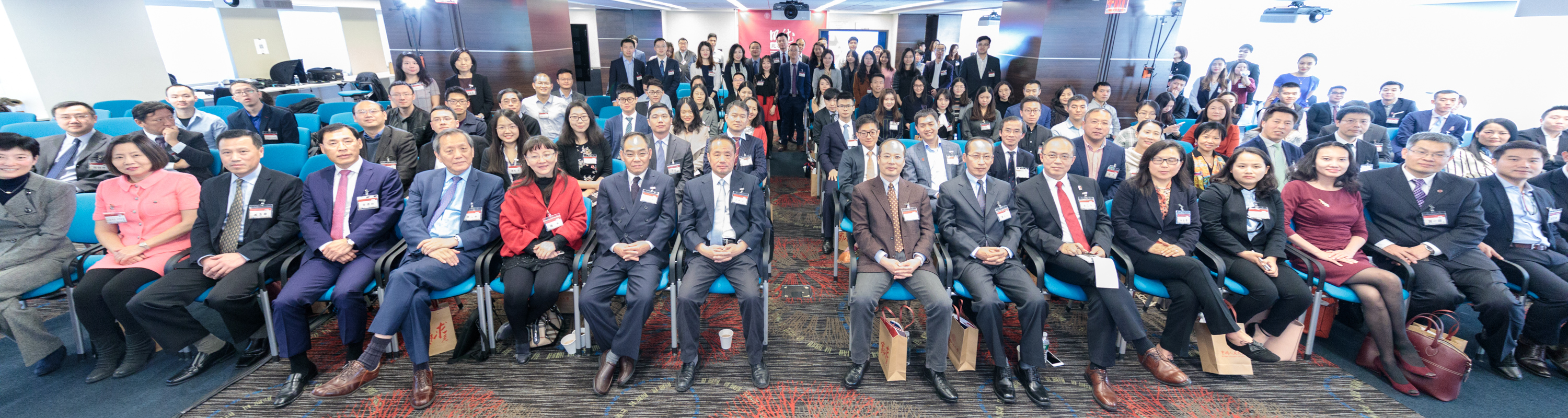
Mingde Forum 2018, hosted by the RUC North America Alumni Association, was held on November 4 at Rockefeller Center, one of New York City’s most iconic landmarks. Professor Wang Liming, Executive Vice President of Renmin University of China and a renowned legal scholar, led a delegation from the university to attend the event. Nearly 200 professionals from the economic, financial, and business communities in China and the United States, along with RUC alumni from more than a dozen U.S. states, gathered to discuss China-U.S. relations, the global macroeconomic landscape, and the development of quantitative investment strategies.
Mingde Forum is an open, inclusive, international, and academically oriented forum platform initiated by the RUC North America Alumni Association in 2016. After years of development and continued investment, it has grown into an RUC alumni brand with an emerging international profile and reputation. This year marked the third annual meeting, under the theme “New Choices: From China-U.S. Economic Relations to Quantitative Investment Strategies.” The event was jointly hosted by the RUC North America Alumni Association, Deloitte, Benimax Investment, Beijing Review, and China.org.cn.
Wu Yafeng, President of the RUC North America Alumni Association, delivered the opening welcome remarks. He noted that since its formal establishment in 2015, the RUC North America Alumni Association had organized a major forum for four consecutive years. These events not only created opportunities for high-level exchange among alumni, but also helped enhance the university’s presence on the international stage and strengthen the voice of the Chinese community in American society. More importantly, under the banner of “Mingde,” the Association encourages alumni to uphold the principle of “investigating things and extending knowledge,” remain committed to the university motto of “seeking truth from facts,” embrace the spirit of “the family, the nation, and the world,” and fulfill the mission of being “exemplary citizens of the nation and pillars of society.” As Wu put it, we should “uphold Mingde and make Mingde a habit.”
Wang Wenhua, Consul at the Consulate General of the People’s Republic of China in New York, conveyed congratulations on behalf of the Consulate General on the successful opening of Mingde Forum 2018. He encouraged the Alumni Association to pay close attention to the development of younger alumni, and called on alumni to stay engaged with the development of their country and alma mater, serve as people-to-people ambassadors in China-U.S. relations, and help tell China’s story to the world.
Ma Yunxia, Tax Partner at Deloitte and Acting Chair of the Alliance of North American Alumni Associations of Chinese Universities, and Yu Shujun, Head of the North American Bureau of Beijing Review, delivered remarks on behalf of the co-organizers. Both expressed strong recognition of the RUC North America Alumni Association’s continued commitment to hosting high-level forums and serving alumni and the broader community.
Ma Yunxia also shared her views on China-U.S. relations. She noted that China-U.S. relations are not an abstract concept, but something that affects everyone. In her view, differences themselves are not the most important issue; what matters is the mindset and approach to resolving them. The two sides should respect each other, pursue equality and mutual benefit, and seek mutual understanding.
Yu Shujun said that many of the current differences and conflicts between China and the United States stem, to a significant extent, from misunderstandings about China in the United States as well as biases toward China in mainstream U.S. media. To help the United States develop a more rational and objective understanding of China, she said, it is important to ensure that China’s positions and perspectives are communicated and presented more effectively and more fully in the United States.
Professor Wang Liming was invited to deliver the keynote address. He noted that 2018 marked the 40th anniversary of China’s reform and opening up. Over the past four decades, China had undergone profound changes by adhering to reform and opening up and remaining committed to seeking truth from facts. China’s legal system had also made substantial progress, with a socialist legal system with Chinese characteristics largely established, while the much-anticipated Civil Code was still being drafted and refined. The concept of the rule of law had also become deeply rooted in society.
Professor Wang said that China-U.S. relations were currently at a critical and concerning juncture. It was important to recognize that significant gaps still existed between China and the United States, particularly in certain areas. China therefore needed to focus on getting its own affairs right and steadily improving people’s living standards. China’s development also required stable China-U.S. relations. Regardless of how the international environment might change, however, China would continue to uphold independence and self-reliance, reform and opening up, and the advancement of globalization, while working toward building a community with a shared future for humanity.
He emphasized that confidence is as precious as gold at the present moment, and that as long as people remained united in purpose, they would be able to overcome difficulties. During the Q&A session that followed, Professor Wang also responded to questions from alumni concerning the property rights system.
Dawson Lee, Founder of Benimax Investment and a Council Member of the RUC North America Alumni Association, delivered a keynote presentation analyzing the U.S. economic environment and market conditions through the lens of real estate investment. Drawing on his professional experience, he examined how geography, demographics, politics, and business practices can influence investment decisions.
Panel Discussion: The Macroeconomic Landscape
The first panel, “The Macroeconomic Landscape,” was moderated by Guan Ning, Chief Investment Officer of QuantScape and Council Member and Executive Vice President of the RUC North America Alumni Association. Li Shanquan, Senior Vice President at OppenheimerFunds and Honorary President of the RUC North America Alumni Association; Professor Yang Qijing of the School of Economics at Renmin University of China; Dr. Micheal Ning, Chief Investment Officer of PhaseCapital and an RUC alumnus; Zhang Jianyu, President and CEO of ICBC USA; and Yang Wenkui, Partner at Redstone Capital discussed current China-U.S. economic relations and the international macroeconomic environment.
Drawing on interviews she had conducted with two Chinese private companies and one U.S. manufacturing company, Guan Ning analyzed the impact of the China-U.S. trade conflict on businesses in both countries. She noted that, so far, the effects of the trade war on the macroeconomy and business operations had not yet become particularly apparent, partly because economic data tend to lag behind actual developments.
Li Shanquan argued that economic principles and natural laws cannot be violated. Although the U.S. economy enjoys relatively strong competitive advantages, from a game-theoretical perspective, the “America First” approach and corresponding adjustments in U.S. global policies could trigger countermeasures from other countries, thereby constraining the effectiveness of U.S. policies. He also pointed to growing concerns within the U.S. economy, including government debt equivalent to 106% of GDP at the time, while the country was in a rising interest-rate cycle. Higher interest rates, he said, would create a significant burden.
Professor Yang Qijing had published an article in 2016 titled Trump’s Election: China Faces a Major Challenge, systematically analyzing then-President-elect Donald Trump’s domestic and foreign policies, particularly his China policy, and accurately anticipating that the Trump administration would pose unprecedented challenges for China. At the forum, he further observed that the ongoing trade war was creating both pressure and impetus for China to pursue reform. One of the most important achievements of 40 years of reform and opening up, he said, was recognizing the importance of marketization, the rule of law, protection of property rights, and openness. At the same time, China’s population of 1.4 billion and its vast domestic market represented a major advantage, while its dynamic private sector remained an important source of economic vitality and competitiveness.
Dr. Zhang Jianyu, President and CEO of ICBC USA, analyzed the differences between Chinese and U.S. financing models, as well as the opportunities and challenges facing Chinese companies going global. She argued that for the banking sector to “go out,” it needed to obtain local licenses and provide services comparable to those offered by domestic banks; to “go in,” it needed to integrate companies into global value chains; and to “move up,” it needed to pursue technological advancement and industrial upgrading throughout the globalization process.
Yang Wenkui offered suggestions on bringing U.S. entrepreneurial projects into the Chinese market. He said such efforts should fully integrate the strengths of American thinking and language skills while making full use of local technology, industry expertise, and regional resources for market development.
Dr. Micheal Ning noted that, based on the Federal Reserve’s real interest-rate policy objectives, the U.S. dollar was likely to continue strengthening over the longer-term cycle, making it difficult for emerging-market assets to perform well. Against such a backdrop, he argued that China’s deleveraging efforts might not be particularly well suited to the international environment. Historically, with the United States as a notable exception, deleveraging had been a very painful process for most countries. Regarding the U.S. market, Ning expected the Federal Reserve to continue along its rate-hike path and said that four rate hikes in the following year could not be ruled out. He projected that the 10-year Treasury yield could reach 3.5% and that default rates on high-yield bonds would rise. If the default rate exceeded 3%, he said, the current bull market could also come to an end.
Panel Discussion: Quantitative Investment
The second panel, “Quantitative Investment,” was moderated by Liu Jing, Managing Director of Jstar Capital and Executive Vice President of the RUC North America Alumni Association. Dr. Xu Youyu, Co-Founder and Head of Investment Technology at LibreMax Capital; Lei Xie, Global Head of Equity Research at AQR Capital Management and an RUC alumnus; Ming Cen, Global Macro Research Director and Managing Director at PWP and an RUC alumna; Xiaowei Jiang, Chief Strategist and Managing Director at Welton Investment Partners; Dr. Xiangyang Li, Managing Director at Roosevelt Management Co.; and Dr. Feng Zhang, Partner at EY Advisory Services, discussed the development, strategies, and outlook for quantitative investment.
Dr. Xu Youyu, whose career inspired the character in the film The Big Short, explained his views on the benefits, limitations, and necessity of quantitative investment models. He compared quantitative investment models to “blind men feeling an elephant,” noting that models involve a wide range of variables and therefore require extensive validation. He also raised a fundamental question about quantitative models: Should a model describe the market, or follow the market? He further discussed noise in lending data and the challenges involved in data collection.
Lei Xie shared an overview of quantitative investment in the hedge fund industry and compared active investing with quantitative investing. He noted that while active investors tend to develop a deep understanding of individual companies, quantitative investors focus more on fundamental deviations across a broader universe and seek out market inefficiencies. Quantitative investing uses standardized systems to operate at scale and, through testing different portfolios, identifies assets where investors may have an information advantage.
Ming Cen introduced a range of systematic macroeconomic factors affecting quantitative investment, including economic growth, inflation, central-bank policy, market risk appetite, currency strength, and other variables. Through clear and accessible examples, she explained how correlations among investment targets can become increasingly complex under the influence of different macroeconomic factors. Because these factors are not independent of one another, their interactions can further amplify that complexity.
Dr. Xiangyang Li specializes in quantitative investment in U.S. mortgage debt. He noted that mortgage risk is concentrated primarily in two areas: prepayment and default, making it relatively amenable to quantitative analysis. Although quantitative models have many limitations, he said, the data still contain numerous opportunities to generate returns. The key is to identify those opportunities in historical data, such as risks that may have been overestimated.
Xiaowei Jiang briefly introduced the two major drivers behind the rapid development of machine learning and artificial intelligence, their advantages and challenges in financial applications, and the future trajectory of these technologies in the industry. He argued that AI possesses intelligence but not wisdom, making it difficult for AI to exercise judgment and reasoning like humans in a complex and ever-changing world. As a result, its applications and effectiveness remain subject to limitations.
Dr. Feng Zhang introduced the background and evolution of the London Interbank Offered Rate (LIBOR) and the process of transitioning away from it, as well as the composition of the risk-free rates intended to replace it.
Compared with previous forums, this year’s Mingde Forum attracted a new generation of young alumni leaders to participate in its preparation and organization, while introducing innovations in several aspects of the event. These included new graphic design and promotional materials, live broadcasting through social media platforms such as Facebook and Instagram, enhanced dress guidelines to create a more professional and formal atmosphere, and the addition of a cocktail reception to enrich alumni networking.
The combination of substantive professional discussions and these fresh approaches to event presentation received widespread praise from participating guests and alumni.
The forum once again received enthusiastic support from the alma mater, alumni, and the broader community. The participation of university leaders demonstrated the importance the alma mater places on, and its recognition of, the work of the RUC North America Alumni Association. Alumni from across the United States traveled to attend the event, with some even flying in from China after learning about the forum. The event and volunteer teams, composed largely of younger alumni, worked closely together and devoted substantial amounts of their personal time to planning and executing the forum. Their dedication highlighted both the spirit of service among RUC alumni and the strong sense of community within the RUC North America Alumni Association.
Other guests attending the forum included Zheng Zhiyong, Dean of the School of Mathematics at Renmin University of China; Zhou Rong, Director of the Alumni Office; Huang Yishun, Deputy Director of the University Office; Yuan Yilin of the Office of International Relations; Dong Weiguo, Consul at the Consulate General of China in New York; Wang Yuting, Council Member of the RUC North America Alumni Association; Zhang Peibei, Council Member and Chief Financial Officer; and Vice Presidents Xie Ren and Cheng Chun, among others.
More than 30 representatives of Chinese companies based in New York, members of the Chinese community in the New York area, and representatives of alumni associations of other Chinese universities were also invited to attend. Media outlets including Xinhua News Agency, World Journal, and Bloomberg were present for coverage.
Staff members from Deloitte U.S. once again generously provided volunteer support for the forum. Junzi Catering sponsored beverages for the event, while Yuan Images provided professional photography services to Mingde Forum for the third consecutive year.